Saturday, March 8, 2008

Old friends

Special thanks to Ana Olson for this one

These 2 guys from England reared this lion from the time it was a baby cub .


They were forbidden by the authorities to keep the lion once it reached maturity, so they were forced to give it up.

They took it back to Africa and placed it in a wildlife sanctuary.

A year later, when they returned they were told that the lion would no longer remember them.

Here is the scene from that return visit in Africa

Can we move the election up?

clipped from www.sfgate.com

Bush to veto ban on waterboarding

Harsh tactics help fight terrorism, he says


Dan Eggen, Washington Post

Saturday, March 8, 2008

President Bush is to veto legislation Saturday meant to ban the CIA from using waterboarding and other harsh interrogation tactics and will argue that the agency needs to use tougher methods than the U.S. military to wrest information from terrorism suspects, administration officials said.

Bush's decision to veto an intelligence authorization bill that contains the waterboarding provision is the subject of his weekly presidential radio address, to be broadcast Saturday, the White House said.

"The bill would take away one of the most valuable tools on the war on terror: the CIA program to detain and question key terrorist leaders and operatives," White House spokesman Tony Fratto said Friday.


blog it

Thursday, March 6, 2008

That Martin Luther? He wasn’t so bad, says Pope

Here is a fascinating phenomenon. Pope Clement XVI has somehow managed to secure for himself a split personality in which he functions religiously as BOTH good cop AND bad cop.

Richard Owen does a good job of documenting this in a Times of London article today, this time about Martin Luther.

As we see now a second seeming about face (first with Muslims and now with Protestants) we must ask exactly what it is that we keep seeing here? Is this calculated by Benedict XVI as a path to a higher good? "Insulting people is the best way to generate fruitful interreligious dialogue." Are we seeing a person who simply suffers from a deep inner conflict. "Sometimes I think Islam is inherently evil, sometimes I think its great." Is Pope Benedict XVI a calculatING person, who plays this back and forth game as a means surreptitiously to pursue Catholic imperialism? Kind of a theological rope-a-dope?

Whatever this is, it should properly arouse genuine interest among people who take religious belief and the importance of religious leadership seriously.


Pope Benedict XVI is to rehabilitate Martin Luther, arguing that he did not intend to split Christianity but only to purge the Church of corrupt practices.

Pope Benedict will issue his findings on Luther (1483-1546) in September after discussing him at his annual seminar of 40 fellow theologians — known as the Ratzinger Schülerkreis — at Castelgandolfo, the papal summer residence. According to Vatican insiders the Pope will argue that Luther, who was excommunicated and condemned for heresy, was not a heretic.

Cardinal Walter Kasper, the head of the pontifical Council for Promoting Christian Unity, said the move would help to promote ecumenical dialogue between Catholics and Protestants. It is also designed to counteract the impact of July's papal statement describing the Protestant and Orthodox faiths as defective and “not proper Churches”.

Read the entire article here

Friday, February 29, 2008

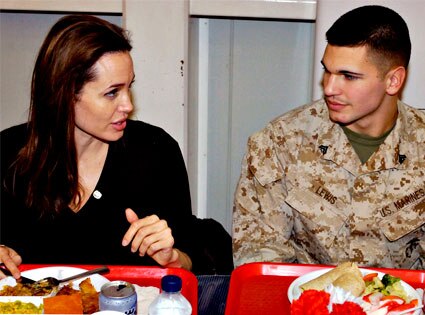
Jolie on displaced Iraqi's

Here is Angelina Jolie's important and well written WAPO op-ed on displaced Iraqi's.

Please click through to the entire article. It contains important information:

Staying to Help in Iraq


We still don't know exactly how many Iraqis have fled their homes, where they've all gone, or how they're managing to survive. Here is what we do know: More than 2 million people are refugees inside their own country -- without homes, jobs and, to a terrible degree, without medicine, food or clean water. Ethnic cleansing and other acts of unspeakable violence have driven them into a vast and very dangerous no-man's land. Many of the survivors huddle in mosques, in abandoned buildings with no electricity, in tents or in one-room huts made of straw and mud. Fifty-eight percent of these internally displaced people are younger than 12 years old.


blog it

Wednesday, February 27, 2008

Scourge of liberalism and godfather of US conservatism

By Jurek Martin
Published: February 28 2008 02:00

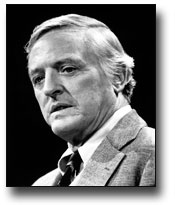
From my earliest years, I have been an ardent admirer and avid reader of the late William F. Buckley Jr. It seems that in all ways he represented character, dignity, and respect, every bit as much as he represented soaring talent and intellectual prowess.

I have read a good many of obituary and testimonial articles (including that of his own National Review) in search of words and a tone by which I would like to have his memory consecrated on Leaves.

For this I have settled upon the this report in the Financial Times.

Please click through to read of this great man in its entirety.

clipped from www.ft.com

William F. Buckley Jr, who died yesterday at the age of 82, was the witty patrician godfather of the modern American conservative movement, a man of many parts whose often self-deprecating erudition was admired by friend and foe alike.

He was a formidable television personality, hosting the programme Firing Line , which ran for 33 years. He founded the National Review, the pre-eminent conservative magazine, wrote nearly 50 books, including spy novels, and was a syndicated newspaper columnist. According to his son, the author Christopher Buckley, he was probably working on an article when found dead at his desk. He had been suffering from diabetes and emphysema.

The beginning of his career as a conservative provocateur, is manifested in his famous first book, God and Man at Yale , published in 1951, a sharp critique of what he saw as the university's atheistic and collectivist tendencies.


blog it

Bush hires wealthy entrepeneur and industrialist NOT to learn anything but to tell Muslim nations how great the US is

Appointment is accompanied by a non-sensical remark about immigration.

clipped from hosted.ap.org

WASHINGTON (AP) -- President Bush, acknowledging that the U.S. needs to burnish its image in the Islamic world, named a Texas entrepreneur as liaison to The Organization of the Islamic Conference.

Before founding SozoTek, he was chairman of Psionic Technologies Inc., an Internet security software company acquired by Cisco Systems in 2002. In 1995, he co-founded Applied Science Fiction, a company specializing in a digital dry film process whose technologies were recently acquired by Kodak. He previously owned Triumph Flexo Industries, which was acquired by American Greetings in 1994.

AP Photo

"Now, a lot of people love America, don't get me wrong," Bush said in the Oval Office where he met with Cumber. "After all, there's a lot of people trying to come here because of what we stand for. But we've got work to do in certain areas."


blog it

Study of Muslim beliefs should guide policy makers

IANS Wednesday 27th February, 2008

US President George W. Bush has often said radicals in the Islamic world who commit terrorist attacks are motivated by hatred for freedom and democracy, but a new poll suggests exactly the opposite may be true.

Only about seven percent of Muslims condone terrorist attacks, but none of these 'politically radicalised' gave religious justification for their beliefs, instead voicing fears that the West and the US are seeking to occupy and dominate the Islamic world.

Most of them actually espouse democratic beliefs but are sceptical of their own governments and the US' professed intention to spread democracy in the Muslim world.

Those were some of the key messages Tuesday from the authors of a new book, 'Who Speaks for Islam? What a Billion Muslims Really Think', which outlines the results from a Gallup organization poll of some 50,000 Muslims in more than 35 predominantly Muslim countries.

'Politics, not piety, differentiate moderates from radicals' in the Islamic world, said Dalia Mogahed, executive director of the Gallup Centre for Muslim studies. 'Terrorism sympathizers don't hate our freedom. They want our freedom.'

Many of the poll's findings went against the 'conventional wisdom' of US politicians, media commentators and the American public about Muslims' views of the West, the role of religion and the value of democracy, according to John L. Esposito, a professor of international affairs and Islamic studies at Georgetown University, who co-authored the book with Mogahed.

'What we have here is the ability to get beyond the battle of the experts' and let 'the data lead the discourse', Esposito said.

What is needed is an overhaul of how the United States reaches out to people in the Muslim world, Esposito said, criticizing the current approach as 'public diplomacy defined as public relations'.

Gallup's polling found that most Americans - politicians and people - suggest improvements in education and more exchanges as a means of improving ties between the West and Islamic countries. What Americans fail to recognize, Esposito said, is that Muslims lobbied just as hard for changes in US foreign policy - including a perceived 'double standard' in promoting democracy around the world.

'One also has to face the fact that policy really does matter,' Esposito told reporters. 'It's the political grievances that are the real drivers' of radicalisation.

In other words, it was not religious beliefs that have driven some Muslims to believe that the Sep 11, 2001 attacks on New York and Washington were justified.

'Not one gave religious justification' for the attacks, and radicals instead expressed fears that the United States was seeking to occupy the Islamic world, Mogahed said. It was actually those who condemned the attacks who would even cite passages from the Quran to demonstrate its moral repugnancy.

But while religion was not the motivation of those who supported the attacks, Esposito said that extremists have clearly 'framed' their arguments as a religious struggle in an attempt to attract devout Muslims to their cause.

'The most solid fear to mobilize somebody (with) is to use religion,' he said.

Among the overwhelming majority of Muslims, their views were driven less by a hatred of the West than a perception that the West hates them. Only 17 percent said the West 'respects' Islam.

Mogahed said that pollsters heard 'over and over' a belief that people in the West considered Muslims 'inferior', while a vast majority said that a change in those negative views of Islam was the best way to improve relations.

In fact, Muslims highlighted technological innovation and liberal democratic values as the two things they most admire about the US, yet fewer than 50 percent believe the US was serious about bringing democracy to Islamic countries.

Broad majorities across Muslim nations - 94 percent in Egypt and 93 percent in Iran - said they would support constitutions in their own countries that included greater freedom of speech and freedom of the press, while majorities also said that religious figures should have no hand in writing those constitutions.

Even 50 percent of so-called radicals said that democracy could spur progress in Muslim countries.

Yet more than 90 percent of all Muslims said that religion played a crucial role in their own lives, and large majorities said Islamic values and Sharia law should dictate a part or all of the state's laws.

Esposito said that the poll showed Muslims hoped for freedom 'but not an American imposed, defined democracy', while Muslims also showed a much greater concern for their own security and economic situation than espoused conflict with the West.

'The dreams are not for war with the West,' he said. 'It's dreams for work and jobs.'